

Summary
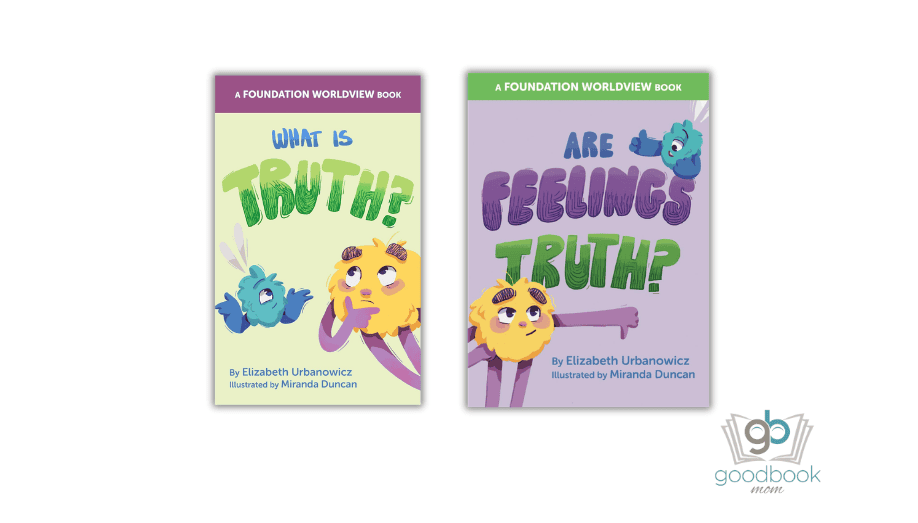
Written by the creator of the Foundation Worldview curriculums, Elizabeth Urbanowicz seeks to explain the philosophical and theological definition of truth in her book What is Truth. Through two cartoon characters called Sebastian and Gregg, children are taken on an intellectual adventure to define that truth is objective. The heart of the book is to show the importance of truth in the Christian worldview. The second book in this series, Are Feelings Truth, aims to explore the difference between feelings and truth. Sebastian and Gregg are joined by their new friend Rosie to explain in simple terms how feelings are subjective and prone to change, while truth is objective and never changes. This book also highlights how feelings about the same situation can be different for different people.
Both books include interactive elements, real-world examples, a bit of humor, and free accompanying worksheets through the Foundation Worldview website that can be used to further solidify the points being made.
Read Aloud Age: 4+
Mom Thoughts
In a culture where feelings are pushed on children as ‘living their truth’ and should be taken as fact, these books are refreshingly simple in how they present the foundational difference between objectivity and subjectivity. They provide an apologetic and Biblical foundation for the youngest of learners through repetition and memorable examples, emphasizing that truth matters because God is the author of truth and His word is true.
I appreciate that from the very onset of the book What is Truth, Urbanowicz lays a Biblical foundation to her apologetics by quoting John 18:37. She states that the purpose Jesus came into the world was to bear witness to the truth. Thus, the foundation for children to understand what truth is comes from Scripture and the testimony of Jesus. The accompanying book on feelings also does an excellent job of showing children that even if we wish something was true, our feelings cannot change reality. This is such a helpful and clear explanation of a concept our culture and society often confuse. I also enjoy the interactive elements of this series. There are questions and hand motions to engage children with these concepts and make them easily understandable. In addition, the illustrated characters are visually appealing, highly colourful, and cute.
The only negative about these books is the assumption that because the Bible says something about God it must be true. While I wholeheartedly agree that the Bible is true, it may be helpful for parents or teachers reading these books with their children to reinforce the concept that what we read in the Bible isn’t a feeling or only true for some people, but it is always true. For example, when Urbanowicz says that the Bible says God is the creator and that is a truth, parents could then emphasize that this is true because the Bible, as God’s Word, is truth. Overall, these two books would be a brilliant addition to build your apologetics and worldview library and would serve as an excellent resource for families, home schools, and Sunday schools. They’re an excellent starting point to help the youngest learners build a worldview on the bedrock of truth.
This review is written by Good Book Mom contributor, Elizabeth Tso. To learn more about Elizabeth, click HERE.
This post may contain affiliate links. Please read our disclaimer for more info.
Buy These Books
At A Glance
| Number of Pages | Number of Minutes to Read |
|---|---|
| about 44/book | 3 |