

Summary
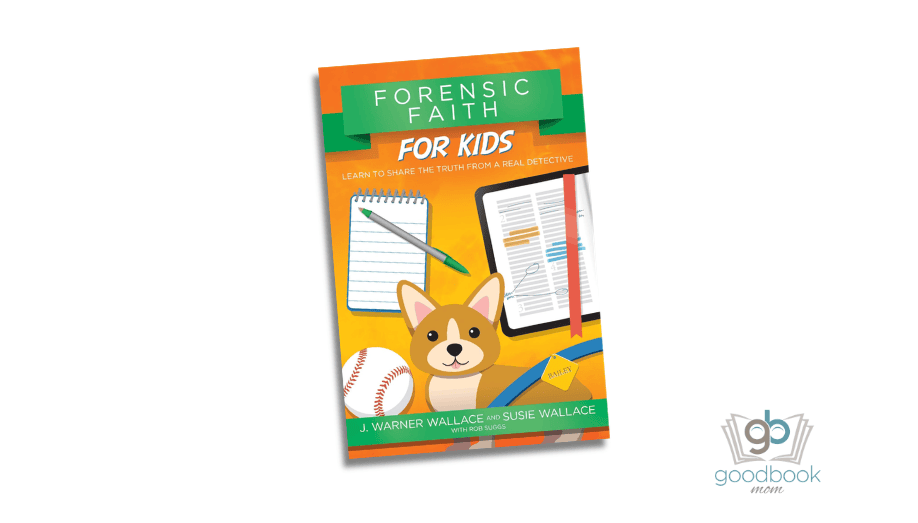
The Junior Detective Academy cadets have two new mysteries to solve. This time, they are trying to find the owner of a lost corgi puppy named Bailey while also helping Hanna and Tiana with their doubts about Christianity and if Jesus is really God. Their instructor, Detective Jeffries is going to show them what it means to trade a blind faith with a “forensic faith”, which is built on evidence, even if every single question they have doesn’t have an answer. As the cadets use the skills they have learned to find the owner of the puppy, they will also confront their own doubt about what Scripture really says about who Jesus claimed to be and if Christianity is a reliable worldview built on evidence and reasoning.
Reading Level: Ages 8-11
Read Aloud Age: 8+
Mom Thoughts
Forensic Faith helps tackle a common argument against the life of Jesus and the authority of scripture. The cadets are challenged by the claim that Jesus never said He was God so why should anyone believe that He is? Tiana confesses to Hannah that she is starting to doubt her faith too because she doesn’t know how to answer this question. Hannah begins to think that maybe she only believes in Christianity because she has been raised that way. I think this can be a common question children have as they grow in their faith and that this book does a great job of walking the reader through the reliability of Scripture and how to read the Bible for themselves.
While Detective Jeffries challenges the cadets to find evidence for their mysteries, he also informs them that Christians also have a duty to investigate and present evidence to others for the belief they have in Jesus. He explains to Hannah that many people question the truth of Christianity, and some people have already decided it’s not true because they don’t want it to be. I think this can be an encouragement to young readers that everyone at some point wrestles with similar questions about what they believe. That over thousands of years good evidence has been collected to prove that the biblical scriptures are true.
As Hannah investigates the scriptures and life of Christ, readers are also able to see that even if Christians present reliable reasons to believe in the bible, some people still may choose to not believe. It’s made clear in the book that just finding evidence to share with others is not the only way Christians are to share about God. I think this is an important distinction made which is that apologetics is not the gospel. Both are valuable and sharing the good news and trusting God with the results the path of the Christian life. I think this can also embolden young readers to see that no one is ever too young to share about their belief in Christ and that ultimately, God is in control.
In my opinion, this book is the easiest from this series for younger readers to understand. While the other books from J Warner Wallace for kids (Cold-Case Christianity and God’s Crime Scene) cover a lot of scientific theories and investigative models, Forensic Faith for Kids feels easier to read and follow along with since it uses fewer technical terms. I would still encourage parents to read along with their younger children in order to explain chapter content.
Other Things to Know:
The end of the book touches on why God may not answer a prayer, even if it is a prayer that seems righteous, like Marco believing in Jesus. The cadets struggle with why God didn’t do what they asked. The book touches briefly on how God is sovereign over all things, even when they don’t understand.
This book also contains online resources such as worksheets, discussion guides, and videos. I encourage parents to take advantage of these great free resources in order to expand on what is covered in the book.
This review is written by Good Book Mom contributor, Melissa Grimes. To learn more about Melissa, click HERE.
This post may contain affiliate links. Please read our disclaimer for more info.
Buy This Book
At A Glance
| Number of Pages | Number of Books |
|---|---|
| 134 | 8 |