

Summary
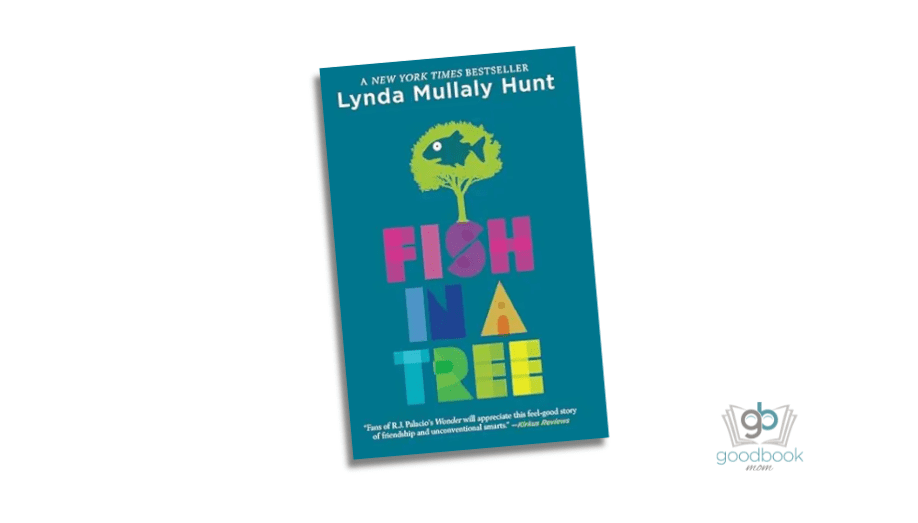
In Fish in a Tree, sixth-grade student Ally Nickerson carries a secret she has trouble explaining. She can’t read and has difficulty writing. The book chronicles Ally’s journey of being bullied, misunderstood, and not understanding her own struggles. She covers up her struggle to read and write until a teacher, Mr. Daniels, helps her after she is diagnosed with dyslexia. Sixth grade is also the year Ally makes two friends and shows significant improvement in school.
Reading Level: Ages 9-11
Read Aloud Age: 10+
Mom Thoughts
Fish in a Tree is a New York Times bestseller and draws from some of the author’s own experiences. I can’t argue that many parts of the book are well written, making it an engaging story. The author, Lynda Mullaly Hunt, does a good job showing Ally’s character development. However, the book has some components that do not make it suitable for all readers and would not make my list of books to recommend to middle school girls.
Ally has a lot of dark and negative self-talk, such as her imagining herself tied to train tracks. The bullying Ally receives from Shay also felt overly emphasized and continued for so long throughout the book that I found myself growing weary of it. The book also contains a subtle
allusion to a problematic and unbiblical worldview. The book does have a few positive themes. Mr. Daniels shines as a wonderful example of a caring, engaging teacher. It shows the inner struggle that kids with learning difficulties face, which could be used as a good teaching tool for readers. Unfortunately, Fish in a Tree leans so heavily on name-calling and negative self-talk that it misses out on the opportunity to highlight these positives more.
Language:
A lot of negative self-talk and name-calling, like “freak, dumb, and loser.” Once, Shay tells Ally, “Everyone agrees you should crawl in a hole and never come out.” Most of the negative language comes in the form of bullying and kids making fun of other students.
Questionable Behaviors:
Ally tries to cover up her struggle to read by lying, misbehaving, and disrespecting adults. Once, Ally goes with her teenage brother, Travis, into a pawn shop. Students physically hit other students, including a boy hitting a girl. Keisha and Ally complimented Albert on his fighting ability.
When Ally makes something for a class project to demonstrate a rainbow prism, one kid wants to give to his bus driver, who “likes rainbow-colored things.” The book paints the kid as ignorant of the rainbow’s connection to the LGBTQ community.
Sexual Content:
Ally once hugs Albert. Boys ask if Ally and Keisha are Albert’s girlfriends, to which one boy replied that he couldn’t get one.
Other Things to Know:
The book gets its title from a quote often attributed to Albert Einstein: “If you judge a fish by its ability to climb a tree, it will live its whole life believing that it is stupid.”
Some of Ally’s imagination can seem dark, such as when she imagined herself lying on a train track.
There’s a reference to Native Americans wishing on a butterfly.
This review is written by Good Book Mom contributor, Melanie. To learn more about Melaine, click HERE.
This post may contain affiliate links. Please read our disclaimer for more info.
Buy This Book
At A Glance
| Number of Pages | Number of Chapters |
|---|---|
| 320 | 51 |