


Summary
This three-book series aims to aid parents in talking to their children about sex, relationships, and puberty from God’s perspective.
The Talk: 7 Lessons to Introduce Your Child to Biblical Sexuality (Ages 6-10)
Changes: 7 Biblical Lessons to Make Sense of Puberty (Ages 8-12)
Relationships: 11 Lessons to Give Kids a Greater Understanding of Biblical Sexuality (Ages 11+)
Mom Thoughts
These three very short books are written like a script for a parent to use with a child. These are made to be an expansion of family Bible reading and the authors make it clear that if you have established that in your home, do that before starting these books. The author also makes a case that as Christian parents, we often fear awakening a desire in our children and let the pendulum swing too far the other way. “The fear of too much too soon often means we speak too little too late.”
The authors also acknowledge that the ages they have put on the books are guidelines, but they make a case for why they have chosen the ages they have. I appreciate that each chapter or “lesson” has a scripture reading and processes everything through a truly Biblical worldview. There is not a gospel presentation in this series, with which I am actually okay. There are a few Christian puberty/sexuality books for this age that have really great approaches and wording for the topics at hand, but when it comes to a gospel presentation, they are vague, muddy the waters, or get something not quite right. I’d rather have this approach than have a less-than-stellar gospel presentation that needs correcting.
The Talk (Book 1):
This book lays the foundation of Biblical sexuality well. It covers the biological differences between men and women, the basics of sexual intercourse and how babies are conceived, the development of human life in the womb, the good purpose of sex in marriage, the sin of adultery, rape and sexual abuse, and honoring God with your body.
Those may sound like topics that are too big to talk about with your 6-10 year old, and as the parent you get to decide when they are ready for these conversations, but they are handled well and without too much detail. The rape/sexual abuse chapter uses the story of Tamar and Ammon from 2 Samuel. This is the shortest lesson but is very helpful for children to understand that no one should try to touch their private parts or get them to have sex with them. While discernment should obviously be used as to when your child is ready for these topics, it is important that parents instill Biblical truth about sexuality in their children before the world does.
Changes (Book 2):
The second book in this series builds upon the first. If you want to introduce the topic of puberty without having first had the conversation about sex and what it is, this might not be the best or easiest option to use, as they are assuming the child has gone through the first book to lay those foundations. This book covers puberty being a natural and good part of growing up, how the human body changes all through life, mental and emotional changes of puberty, the physical changes that happen that are the same in both genders as well as the differences, and physical attraction.
While these important topics are covered well, I actually appreciate that nothing is gone into in great detail. These are meant to be starting places for conversations, laying a strong Biblical foundation without adding in more than is necessary. Encourage your child to ask questions and come to you with anything, but the authors have taken great care in finding this balance as a resource.
Relationships (Book 3):
This book goes into some trickier conversations, which is why the age range is significantly higher. The structure starts with teaching how sex and desire were created by God and were created good, how sin effects sex and relationships, then explores three strategies for holy relationships: Run From, Run To, Run With.
Some of the sensitive topics include adultery, STIs, unwanted pregnancy, same-sex attraction, masturbation, and pornography. I greatly appreciate how the authors take care not to just say, don’t do x, y, or x, but to give them something else to turn to. They make it very clear that filling your heart and mind with Christ is the only thing that will satisfy. This is missing from so many books on the topic, and I think it’s a vital distinction.
While, overall, I agree with the language used through this book (and series), there were two instances where I do not agree with the prescribed answer. First, when speaking of same-sex attraction, one of the answers to their questions reads, “Same-sex attraction is a temptation, not a sin.” I know this is hotly debated, but I would argue the attraction itself is sinful as it is outside of God’s design. Would we argue that being attracted to children is only a temptation, not a sin? Hopefully not. The other wording I disagree with is concerning masturbation. It reads, “…it does remind us the problem with masturbation is not the act itself. The problem is the desire behind the act…” While the desire behind the act is obviously the sinful root cause, the act is still sinful. I do not think it wise or Biblical to divorce the two. Masturbation perverts the good gift of sex of pleasure, bonding, and intimacy into a solo act of pleasure. Because both of these instances occur in “canned” response sections for the parents, it’s very easy to change these two small instances.
Overall, I think this final book and the entire series as a whole is thoughtfully and biblically constructed. I highly recommend this for your family.

The Talk: 7 Lessons to Introduce Your Child to Biblical Sexuality

Changes: 7 Biblical Lessons to Make Sense of Puberty
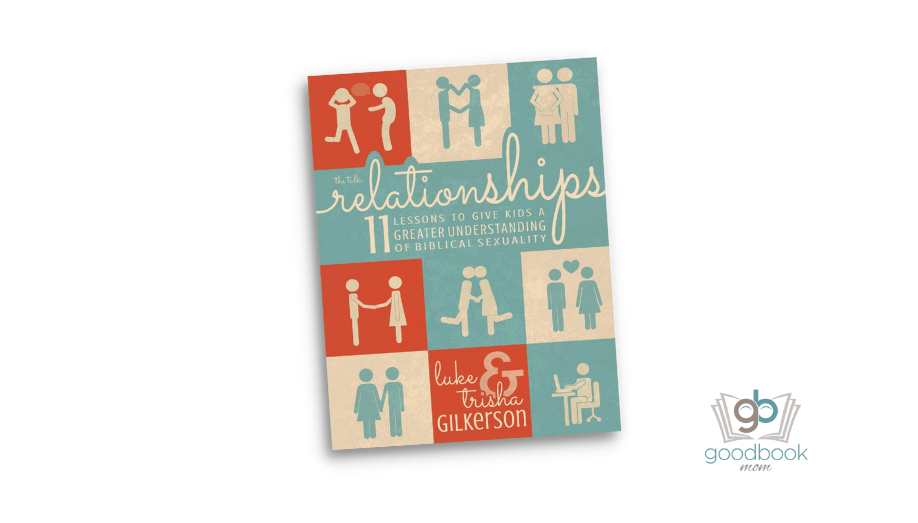
Relationships: 11 Lesson to Give Kids a Greater Understanding of Biblical Sexuality